

Unit Assembly & Test
Final box-build and unit assembly for sub-contract PCBA programmes: mechanical assembly, cable integration, functional testing and inspection, delivering fully integrated, ready-for-use products to defined customer specifications and released build documentation, from one-off prototypes through to repeat production.
Unit Assembly
From subassemblies to finished equipment
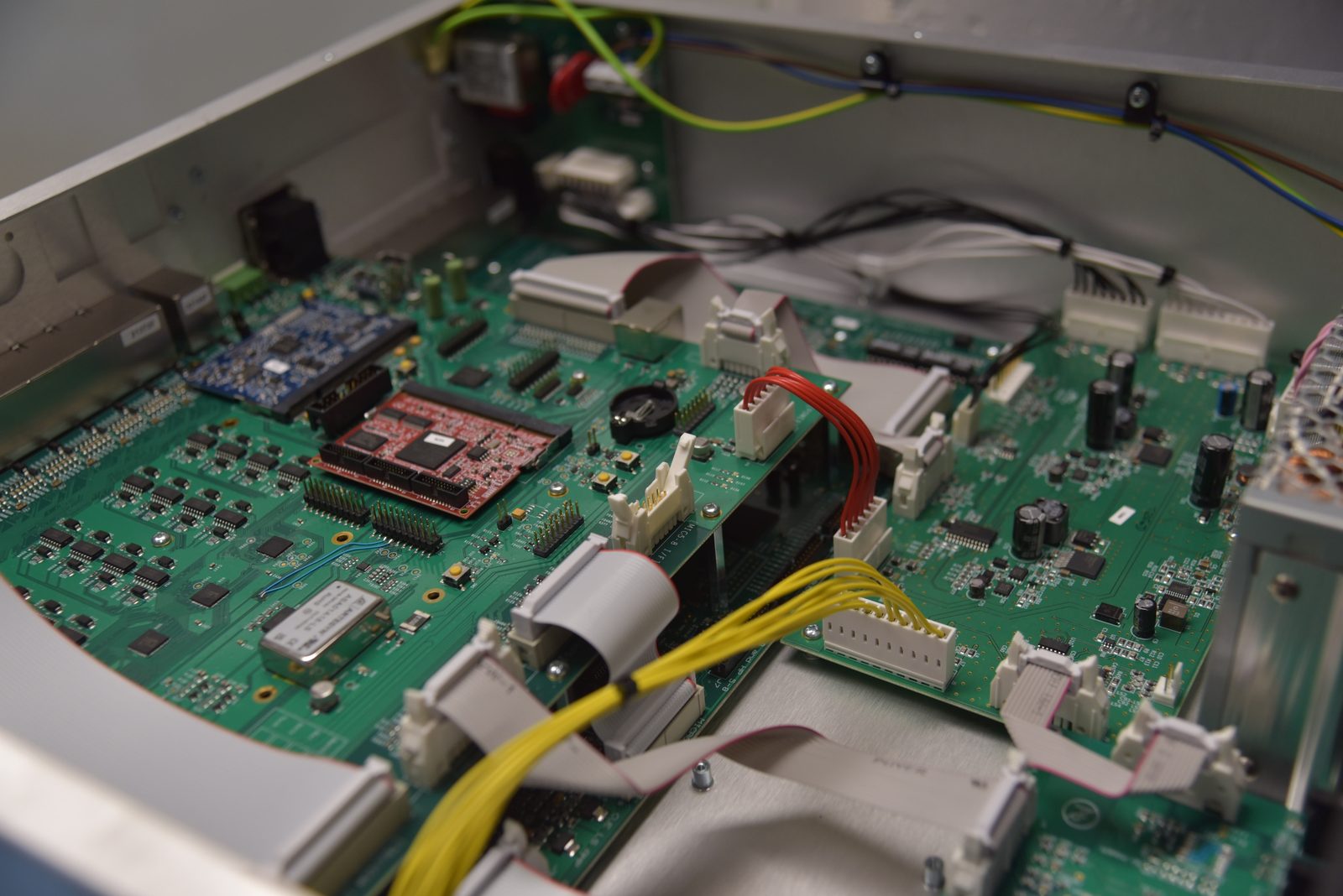
Our final unit assembly service delivers fully integrated, ready-for-use products manufactured to defined customer specifications and released build documentation. We integrate mechanical, electrical and electronic subassemblies into complete units, managing interfaces such as fasteners, cable interconnects, earthing/bonding, and enclosure fit to ensure correct functionality and repeatable assembly outcomes. The service is suitable for one-off prototypes, pilot builds and repeat production, providing a controlled route from subassemblies to finished equipment.
Units are assembled using controlled processes supported by documented work instructions, tooling requirements and defined quality checkpoints. Build activities are undertaken with appropriate handling controls (including ESD precautions for sensitive electronics) and verification of key characteristics at each stage to prevent defect escape. On completion, assemblies undergo final inspection and functional verification, as specified, to confirm electrical performance, mechanical integrity and overall compliance prior to release for dispatch.
Where required, we support unit configuration and software/firmware loading, product identification and labelling, serialisation, and packaging and preparation for installation or shipment, in accordance with customer requirements. This may include packing products into point-of-sale (POS) packaging and kitting associated accessories, documentation and customer-specified inserts. From low-volume builds to ongoing production programmes, Icom-Scottech provides a dependable, auditable final assembly service that converts manufactured components into complete, customer-ready products.
Unit Assembly
Mechanical Assembly
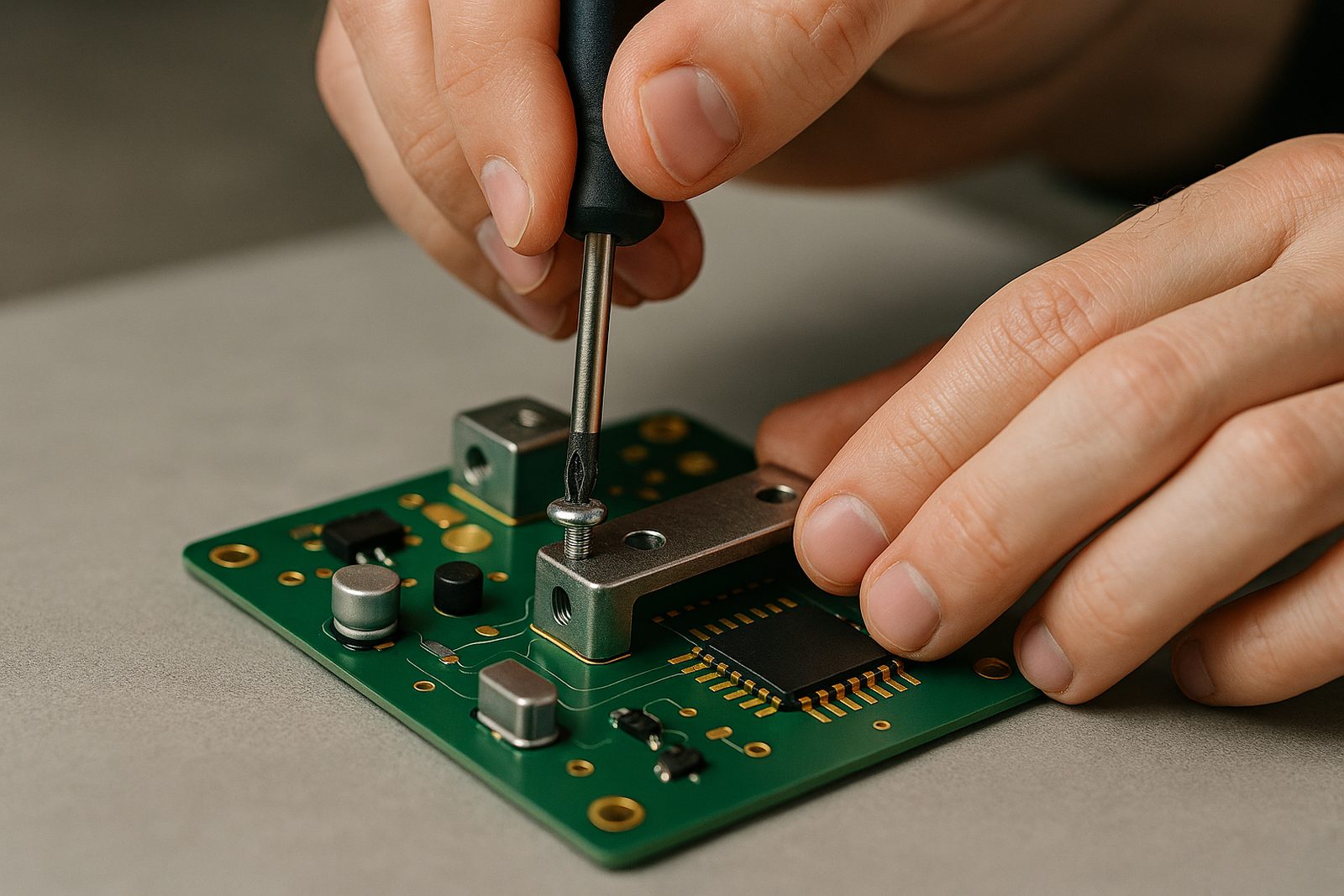
Icom-Scottech provides mechanical assembly services to support the build and integration of electronic products and sub-systems. We assemble mechanical sub-assemblies and enclosures including chassis, housings, panels, brackets and mounting hardware, ensuring correct fit, alignment and repeatable build quality. Mechanical assembly can be delivered as a stand-alone service or as part of a complete box build and final product integration programme.
Mechanical builds are undertaken using controlled and documented processes, supported by defined tooling requirements and stage-by-stage quality checkpoints. Where applicable, torque-controlled assembly methods are used for critical fasteners, and consumables such as thread-locking compounds, adhesives, thermal interface materials, gaskets and sealants are applied in accordance with the build specification. Earthing and bonding provisions are implemented as required, including the preparation of contact surfaces and verification of secure mechanical retention, to support electrical safety and long-term reliability.
When mechanical assembly is combined with electronics integration, we manage interfaces such as PCB mounting, cable routing, connector alignment, strain relief and segregation of wiring to maintain serviceability and functional integrity. Thermal management features (for example heat sinks, thermal pads and mechanically retained power devices) are fitted in a controlled manner to support heat transfer and product robustness. Appropriate handling controls are applied to protect sensitive components and finishes during build, including ESD precautions where required.
Completed assemblies are inspected to confirm build conformity, including verification of hardware selection, mechanical integrity, critical dimensions and the correct implementation of specified build notes. Where required, build records, serialisation and configuration status are maintained to support traceability and audit requirements. Assemblies are then released for subsequent test, final inspection, packaging or onward integration, in accordance with the agreed customer process.
Unit Assembly
Design for Manufacture
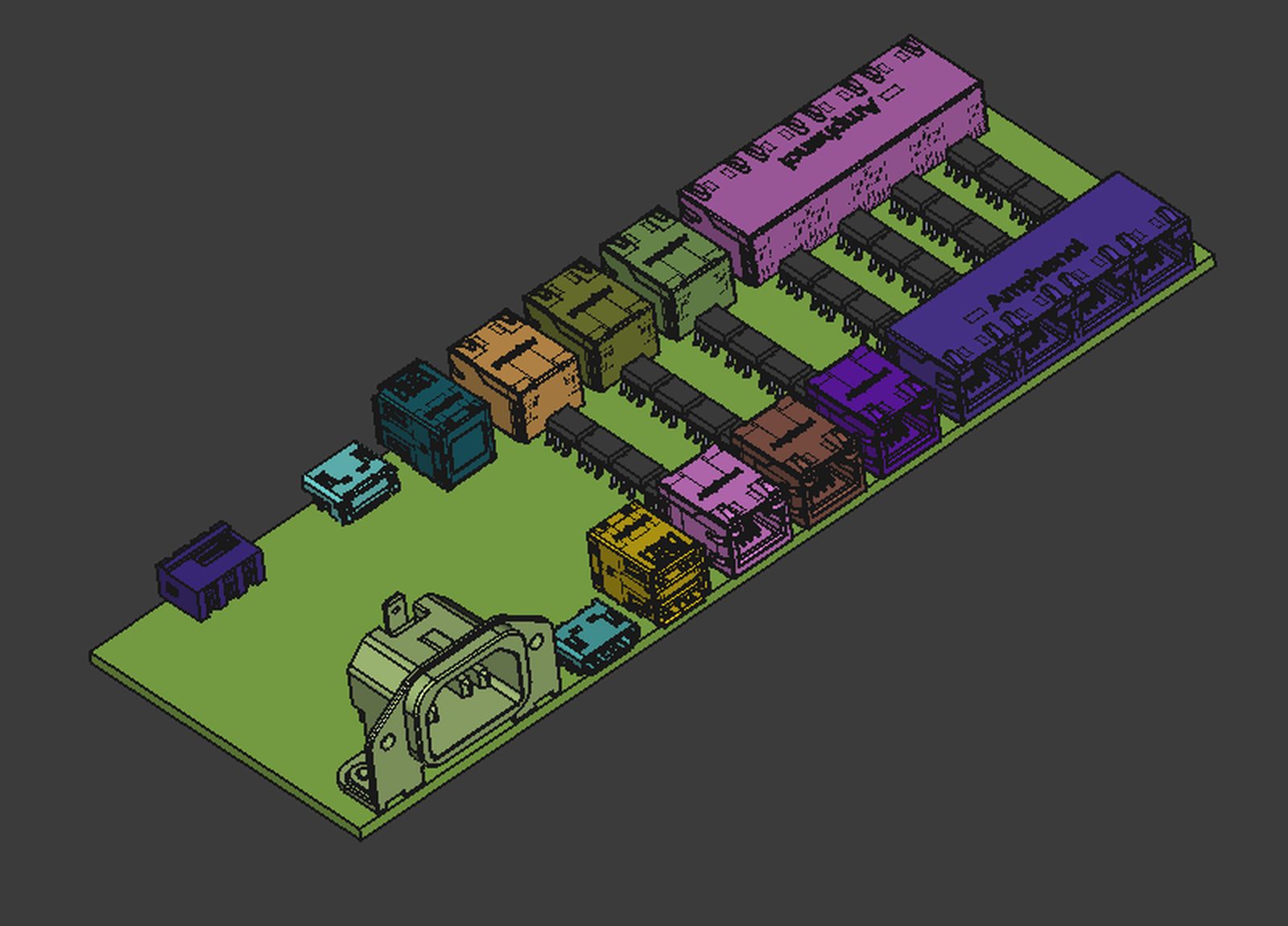
Icom-Scottech provides design for manufacture (DFM) support to help customers translate design intent into a robust, repeatable and cost-effective manufacturing process. We collaborate during new product introduction and ongoing production to identify manufacturability risks early, improve buildability, and reduce the likelihood of defects, rework and schedule disruption. DFM input can be applied across electronics assembly, cable harness manufacture and mechanical/box-build integration and is delivered within an ISO 9001-aligned quality management framework.
DFM activities may include review of the bill of materials (BOM) and approved vendor list (AVL), assessment of component availability and lifecycle risk, and verification of PCB footprints, land patterns and polarity/orientation conventions. We can provide feedback on panelisation strategy, fiducials, tooling holes, solder mask clearances and other features that affect placement accuracy, soldering performance and inspection coverage, as well as design-for-test (DFT) considerations such as access for probes, connector selection and test-point strategy. Workmanship expectations are agreed with the customer, including the applicable IPC class where specified, and build documentation is reviewed to ensure that acceptance criteria are clear, measurable and achievable in production.
Outputs from DFM are captured through disciplined documentation and configuration control, including clarified fabrication and assembly notes, controlled work instructions and build packs, and agreed inspection and test requirements. Where appropriate, we support first-article and pilot builds to validate processes, confirm yields, and establish stable process parameters prior to release to repeat production. Continuous improvement is supported through structured review of inspection and test outcomes, nonconformance reporting, and corrective and preventive action (CAPA), with root-cause analysis used to drive targeted process, tooling or documentation updates.
Unit Assembly
Testing
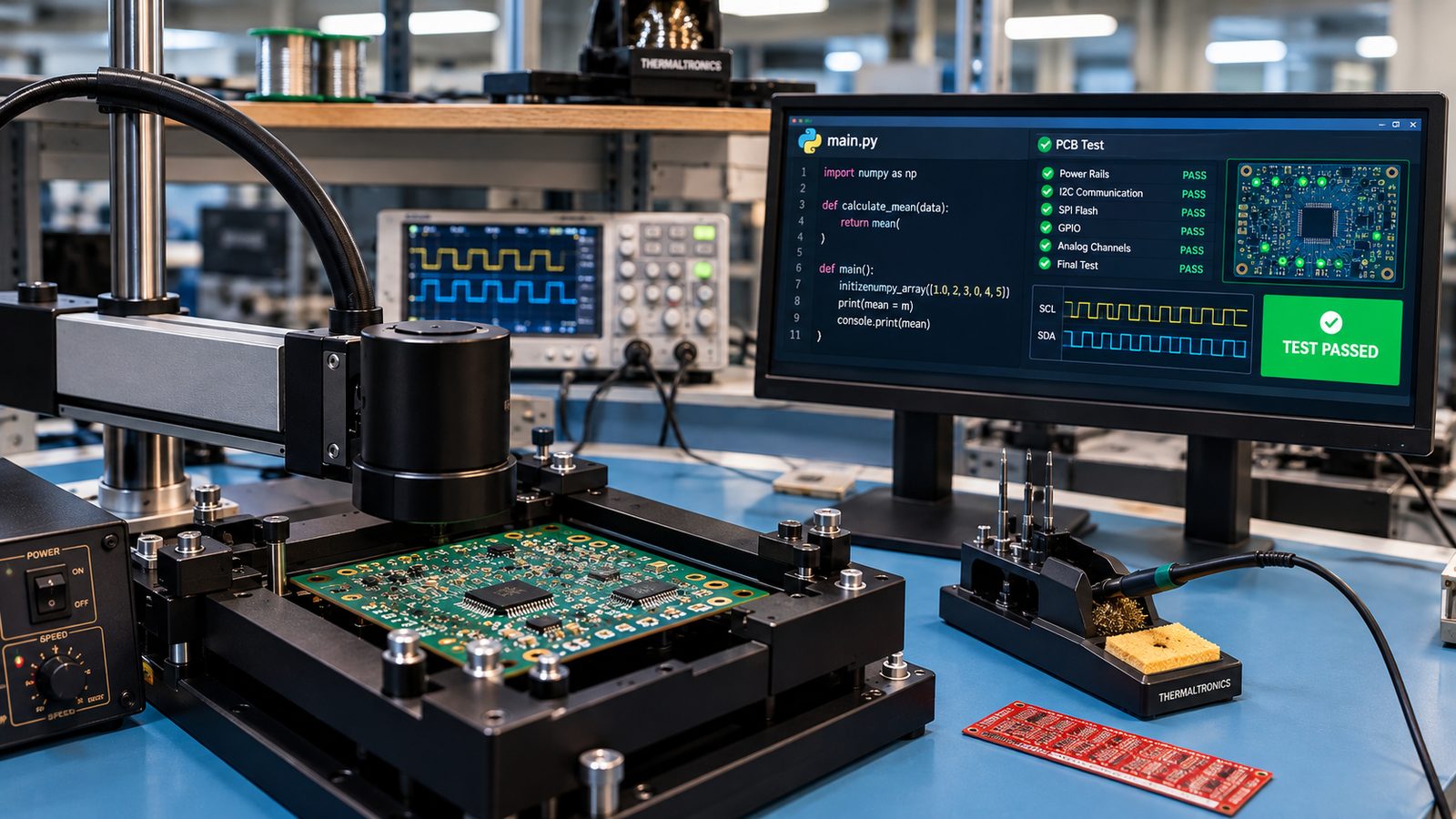
Icom-Scottech provides test and verification services to support electronics assembly and final unit integration, ensuring that products are proven against defined acceptance criteria prior to release. Testing is planned in line with the product requirement and the stage of manufacture, from board-level verification through to end-of-line functional checks. This structured approach helps to identify issues early, protect downstream processes and provide confidence in the performance of the finished unit.
Where required, we support software and firmware programming as part of the manufacturing process, including loading of approved images, configuration of product variants, and verification of programmed identity. Programming activities are performed to controlled instructions using customer-specified tools and files, with version control applied to ensure that only released software/firmware baselines are loaded. Where specified, programmed configuration may be verified using defined checks (for example checksum or read-back verification) and build records can be updated to maintain traceability between the serialised unit and the software/firmware version installed.
Electrical and electronic test may be applied at PCB or unit level to confirm correct assembly and circuit integrity. Depending on the product and specification, this can include continuity and isolation checks, verification of power rails, measurement of key analogue and digital signals, and confirmation of I/O operation. Functional testing is then used to demonstrate correct operation of the assembled product in accordance with the intended use case, which may include operation under simulated load, verification of communications interfaces, and confirmation of safety and interlock behaviours where applicable.
Where customers provide test specifications, procedures, fixtures or software, we work to implement and execute the defined process as part of the manufacturing route, incorporating any customer-required sequencing, soak periods, calibration requirements or data capture methods into the test plan. Test outcomes are recorded in accordance with the agreed requirements, supporting pass/fail reporting and, where specified, retention of measured results against serialised units. Units failing test are identified and quarantined, with failures recorded via nonconformance reporting and triaged in accordance with agreed disposition processes. Fault-finding is undertaken using controlled methods to determine root cause, followed by authorised rework or component replacement as appropriate, with re-test performed to confirm compliance before release.
Unit Assembly
Inspection
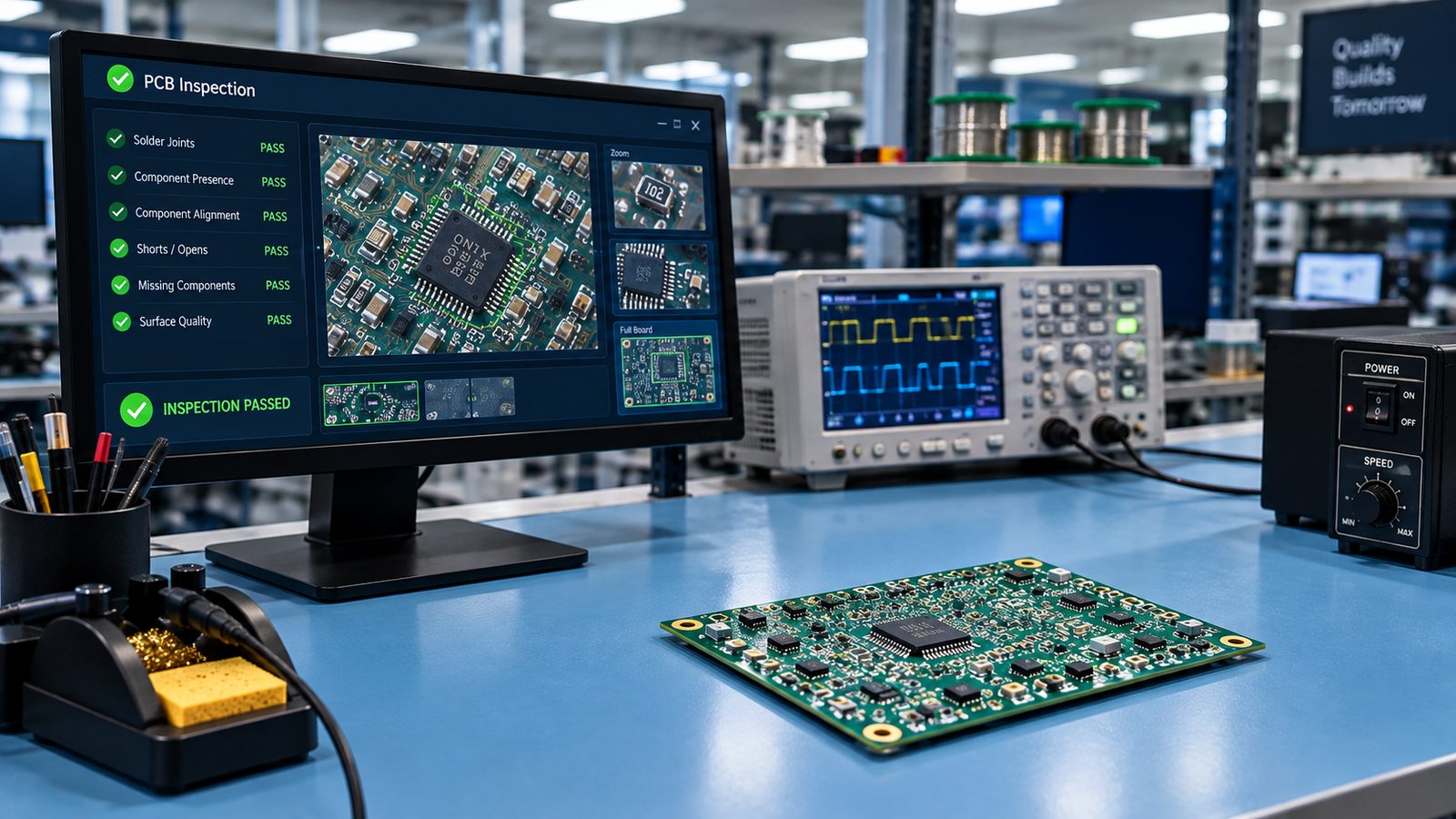
Icom-Scottech applies structured inspection activities throughout manufacture to verify workmanship, confirm conformity to build documentation and reduce the risk of defect escape. Inspection is planned in accordance with the product requirements and the stage of build, from first-article verification through to final release checks. This staged approach supports stable processes, predictable yields and consistent compliance with customer specifications.
Inspection begins at goods-in, where received materials and components may be checked against purchase requirements and build documentation to confirm correct part identification, quantities, revision status and, where applicable, supporting certification. Incoming acceptance can include verification of packaging condition, labelling and traceability information, and visual checks to identify damage or nonconformance prior to release into controlled stock. This early verification supports build readiness and reduces the risk of assembly delays caused by incorrect or unsuitable materials.
For new products, engineering changes or process introductions, first article inspection (FAI) may be performed to validate that the manufacturing process produces outputs that meet the released drawings, bills of materials and acceptance criteria, including verification of component fit and orientation, workmanship standards, key dimensions and interfaces, and any customer-defined critical-to-quality characteristics. Findings are recorded and, where necessary, actions are agreed to update documentation, tooling or process settings prior to further production.
During production, in-process inspections are applied at defined points between manufacturing stages to confirm that the build remains within specification and to prevent issues propagating to later steps. Prior to assembly, kit preparation activities may be verified to ensure that the correct materials, quantities, revisions and work instructions are present and issued to the job. In-process checks may then include confirmation of correct component placement and orientation, verification of conformance to the released build documentation, and inspection of workmanship features such as solder joint acceptability, wiring and pin-out accuracy, torque/fastener integrity, and the correct implementation of specified build notes.
Where applicable, automated optical inspection (AOI) is used to support verification of surface-mount and through-hole assemblies, including checks for component presence, polarity, orientation, placement accuracy and solder joint quality. AOI programmes are set in accordance with the assembly specification and are used alongside visual inspection to provide additional coverage and consistency. Inspection results are reviewed, with any anomalies managed through controlled rework and re-inspection in line with documented processes.
Following assembly and test, units undergo final inspection to confirm overall build integrity, correct configuration and labelling, and compliance with customer-defined release criteria. Prior to dispatch, final shipping inspection (pack-out) checks may be performed to verify that the correct product and accessories are supplied, that documentation and certificates are complete where required, and that packaging (including point-of-sale packaging where specified) provides appropriate protection and presentation, giving customers confidence that each shipment is complete, correctly identified and fit for purpose.
Ready to start your build?
Upload your BOM and manufacturing data package, or contact us by phone or email to discuss your requirements.