

Electronics Assembly (PCBA)
Sub-contract PCB assembly (PCBA): surface mount (SMT), through-hole and hybrid electronics assembly, cable and wire harnesses and bare PCB sourcing, from first prototypes through to volume production.
Electronics Assembly
Built to controlled, documented processes
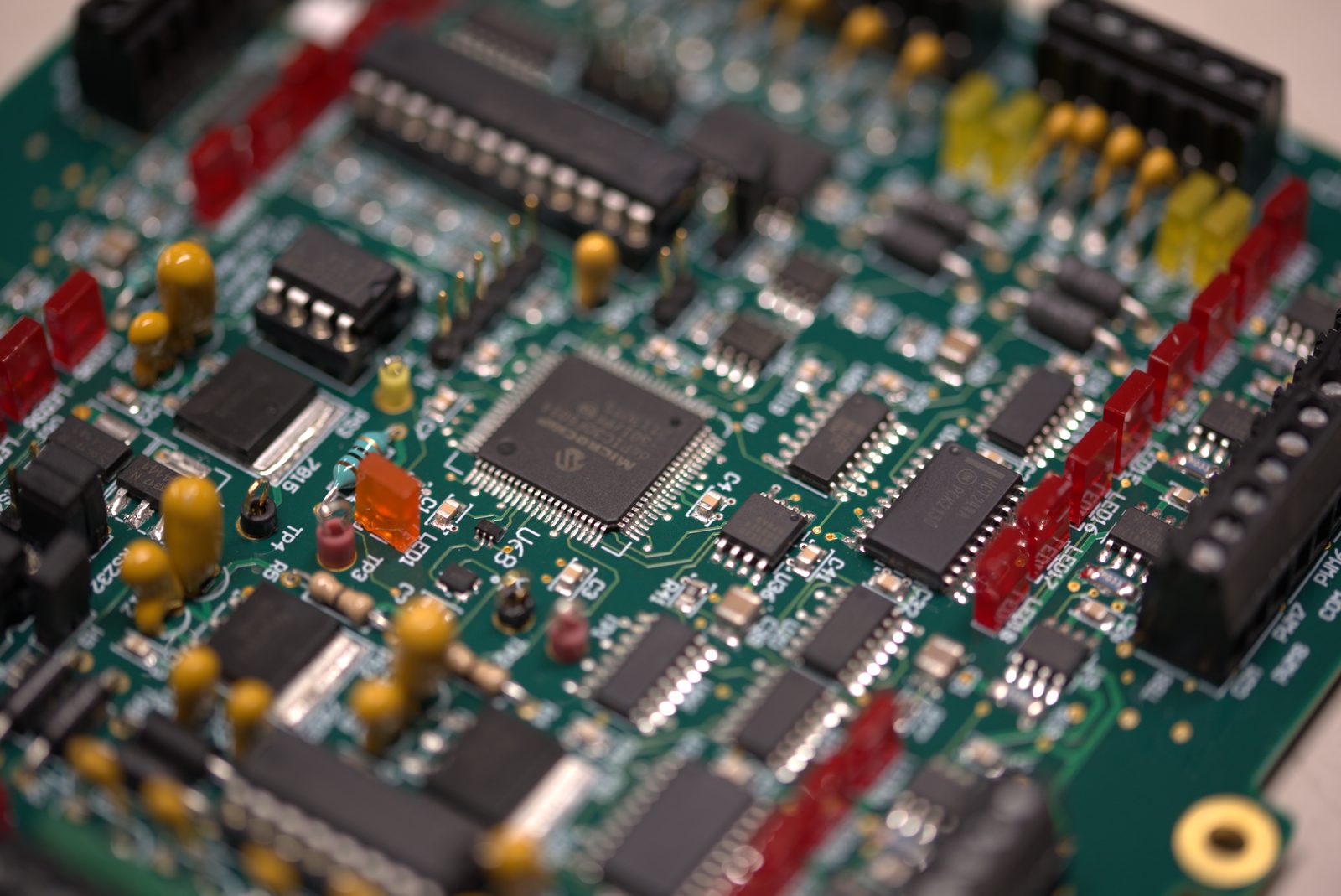
Icom-Scottech provides comprehensive sub-contract electronics assembly services designed to meet the stringent requirements of modern industry. We support customers across the full product lifecycle, from rapid prototyping and first-article builds through to low-, medium- and high-volume production. Our technicians assemble electronic products with a focus on workmanship, process discipline and repeatability, ensuring consistent results across every build.
Our capabilities include printed circuit board (PCB) assembly, through-hole and surface-mount technology (SMT) build, hybrid-technology assemblies, cable and wire harness manufacture, box build, and final product integration. Assembly activities are performed using controlled and documented processes, with appropriate handling and build controls applied to protect components and assure product integrity.
We work in close partnership with our clients to provide effective design for manufacture (DFM) support, identify opportunities to improve buildability, and reduce production risk prior to release. Whether supporting new product introduction or established programmes, we place particular emphasis on quality, traceability and long-term performance, providing a dependable manufacturing service aligned to customer and regulatory requirements.
Electronics Assembly
Surface Mount Technology
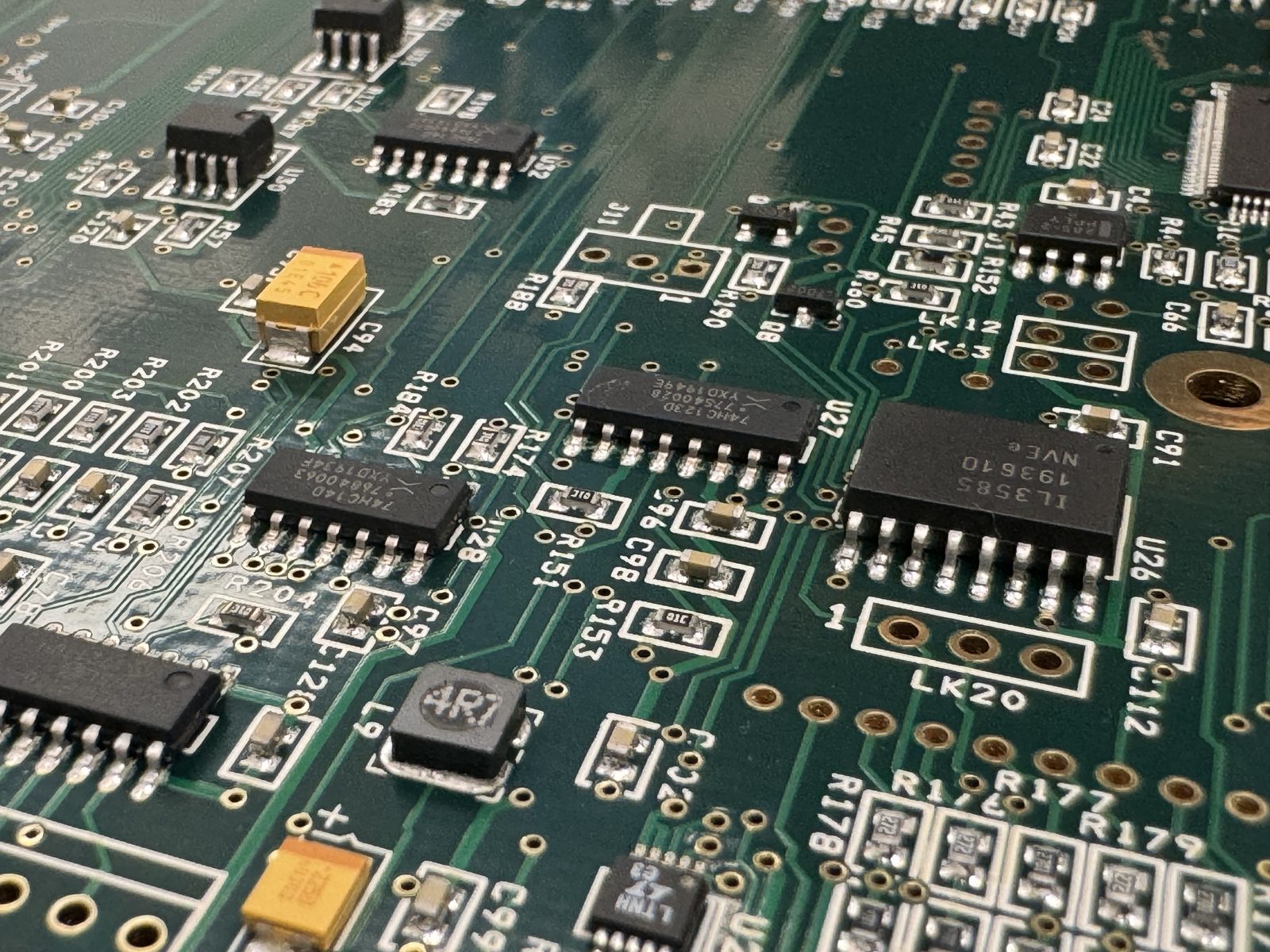
Icom-Scottech provides surface-mount technology (SMT) assembly for high-density printed circuit boards, supporting prototype, pre-production and volume manufacture. We assemble a wide range of component packages, including micro-BGA devices, 0201 passives and large form packages such as connectors, tailoring the build approach to the product's technical and regulatory requirements. From first article builds through to repeat production, our objective is consistent workmanship, predictable yields and robust, field-ready assemblies.
SMT builds are undertaken using a controlled, repeatable process flow, typically comprising solder paste deposition, automated component placement and reflow soldering. Stencil design, aperture geometry and print parameters are selected to achieve the required paste volume whilst minimising defects such as bridging and insufficient solder. Placement programmes are verified for component orientation, polarity and package alignment, and reflow profiles are established, validated and maintained to suit the PCB construction, thermal mass and component limitations. Multiple split machinery lines enable in-process inspection between each production stage, allowing issues to be identified and corrected promptly rather than relying solely on final inspection.
Quality assurance is applied at appropriate stages throughout manufacture. Assemblies may be inspected using visual inspection and automated optical inspection (AOI) to confirm component presence, polarity, orientation and solder joint quality; additional inspection methods can be applied where required by the build specification. Any non-conformances are managed through controlled rework and repair by trained personnel, in accordance with IPC-aligned workmanship expectations and documented work instructions.
To support reliability and compliance, we maintain clear build records and, where specified, component and material traceability (including batch/lot information) alongside revision and configuration control. ESD-safe handling practices are applied to protect sensitive devices, and assemblies can be subjected to functional verification in line with customer documentation to provide confidence in performance prior to integration or delivery.
Electronics Assembly
Through Hole Technology
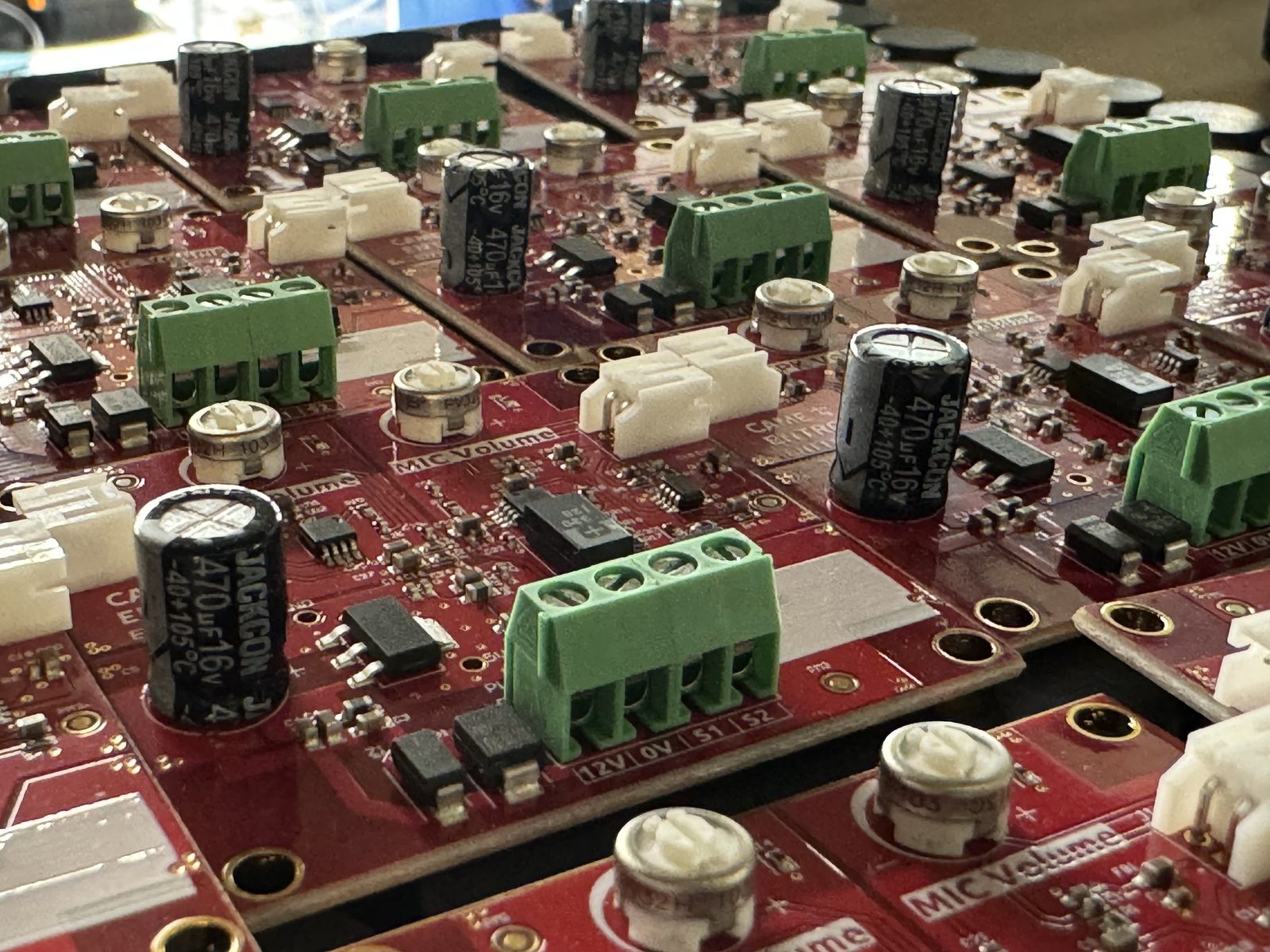
Icom-Scottech provides through-hole technology (THT) assembly for products requiring mechanically robust terminations, high-power interconnects, or specialist components not available in surface-mount formats. We support prototype, pre-production and volume manufacture, assembling a broad range of leaded components including connectors, relays, transformers, power devices and bespoke electromechanical parts. Where required, THT assembly is delivered as part of a mixed-technology build, with integration to SMT processes managed to maintain consistent quality and schedule.
THT builds are undertaken using a controlled process flow, typically comprising component preparation, lead forming where applicable, insertion to defined orientation and height requirements, and soldering. Depending on the product and specification, soldering may be performed by hand soldering or wave soldering, with process parameters set to achieve reliable hole fill and consistent solder fillets whilst protecting heat-sensitive components. Thermal requirements are managed through defined dwell times, solder temperature control and, where appropriate, pre-heat profiles, supporting repeatable solder joint formation across the assembly.
Quality assurance is applied at appropriate stages throughout manufacture. Assemblies are inspected to confirm component identity, polarity and orientation, lead protrusion, solder wetting and joint acceptability in accordance with the build specification and IPC-aligned workmanship expectations. Where required by the application, cleaning processes and verification may be applied to manage residues and support long-term reliability. Any non-conformances are addressed through controlled rework and repair by trained personnel using documented methods and suitable tooling.
To support reliability, auditability and compliance, we maintain clear build records and, where specified, component and material traceability (including batch/lot information), alongside revision and configuration control. Assemblies can be subjected to functional verification in accordance with customer documentation prior to integration or delivery, providing confidence that the finished product meets electrical and mechanical requirements.
Electronics Assembly
Hybrid
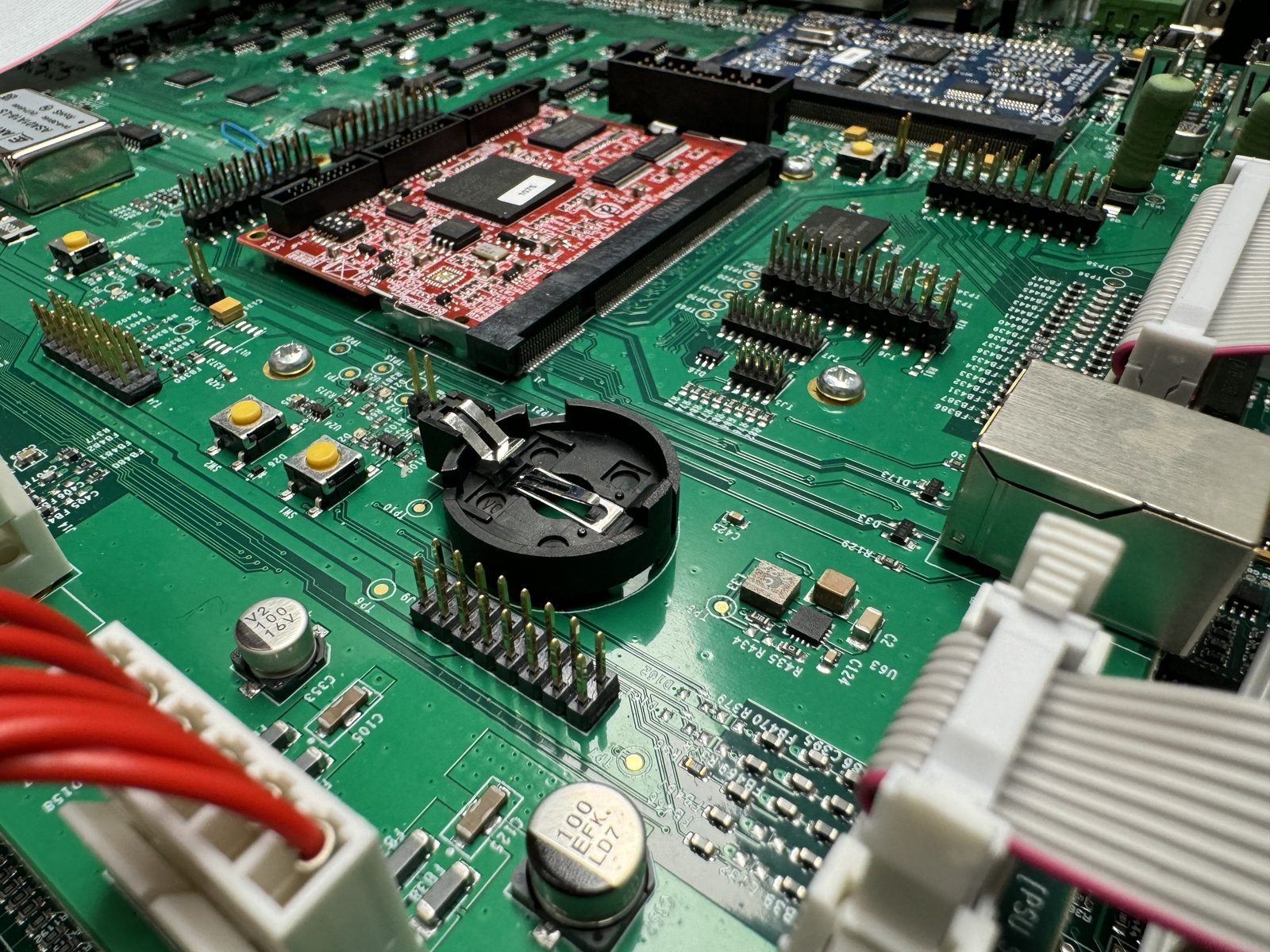
Icom-Scottech provides hybrid-technology assembly combining surface-mount technology (SMT) and through-hole technology (THT) to support products that require both high-density circuitry and mechanically robust interconnects. Hybrid builds are particularly suited to assemblies incorporating fine-pitch SMT devices alongside connectors, power components, relays and other leaded parts. We support prototype, pre-production and volume manufacture, and we manage the interaction between SMT and THT operations to deliver a consistent, repeatable build outcome.
Hybrid builds are undertaken using a controlled process sequence, typically completing SMT printing, placement and reflow prior to THT component insertion and soldering. Build documentation defines the assembly order, tooling and handling requirements, ensuring that reflowed SMT components are protected during subsequent operations such as wave soldering or hand soldering. Where applicable, solder pallets, masking methods and fixture designs are employed to shield sensitive areas and control solder contact. Thermal requirements are managed through defined temperature settings, dwell times and pre-heat profiles to achieve reliable hole fill and solder fillets without compromising adjacent SMT joints or thermally sensitive components.
Quality assurance is applied throughout the hybrid process, with inspection activities aligned to the build stage and technology used. SMT features may be verified using visual inspection and automated optical inspection (AOI), while THT joints are inspected for solder wetting, fillet formation and acceptability against IPC-aligned workmanship expectations and the customer specification. To support auditability and compliance, we maintain clear build records and, where specified, component and material traceability alongside revision and configuration control; assemblies can also be subjected to functional verification prior to integration or delivery.
This integrated approach enables Icom-Scottech to deliver hybrid assemblies that are mechanically robust, electrically reliable and ready for downstream integration activities such as conformal coating, box build and final product test. By controlling interfaces between SMT and THT operations, we reduce process variability, support predictable yields, and provide customers with a dependable manufacturing route for complex mixed-technology products.
Electronics Assembly
Cable Harness
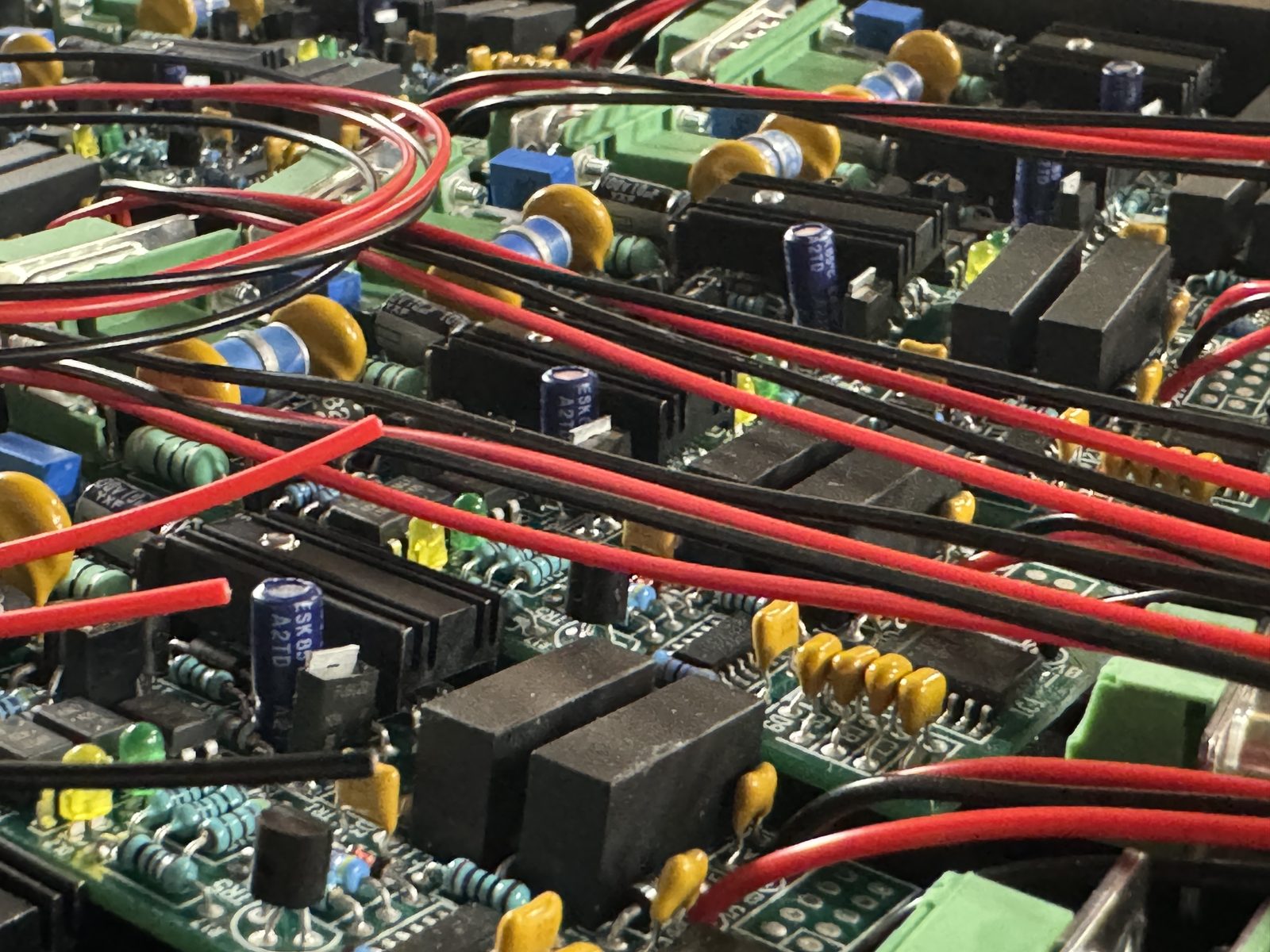
Icom-Scottech produces cable and wire harness assemblies to support electronic products requiring reliable interconnection, effective strain relief and consistent build quality. We manufacture harnesses for both prototype and production requirements, ranging from simple point-to-point looms to more complex multi-branch assemblies incorporating discrete wires, screened cables, connectors and protective sleeving. Each harness is built to the defined drawing or build specification to ensure dimensional accuracy, correct routing and consistent presentation.
Harness manufacture is undertaken using a controlled process flow, typically including wire preparation (cutting to length and stripping), termination (crimping and/or soldering), assembly into connectors, and looming with boots, grommets, heat-shrink, braid or conduit as required. Where crimp terminations are specified, crimp tools are selected and set to suit the contact system, and terminations are produced in accordance with approved methods to achieve consistent electrical and mechanical performance. Identification and labelling are applied where required to support correct installation and to reduce the risk of wiring errors during integration.
Quality assurance is applied at appropriate stages throughout the build. Harnesses are inspected for correct wire type, colour and gauge, termination integrity, contact retention, pin-out accuracy and workmanship, including verification of insulation support and strain relief. Where specified, electrical testing such as continuity and insulation resistance may be performed to confirm circuit integrity and isolation prior to shipment or integration. Any non-conformances are managed through controlled rework by trained personnel using documented methods to maintain product integrity.
To support auditability and compliance, we maintain clear build records and, where specified, component and material traceability for connectors, contacts and cable types, alongside revision and configuration control. Harnesses are packaged and protected to prevent damage in transit, with labelling and documentation supplied in accordance with customer requirements, making them suitable for straightforward installation during box build and final product integration.
Electronics Assembly
Bare PCB Sourcing
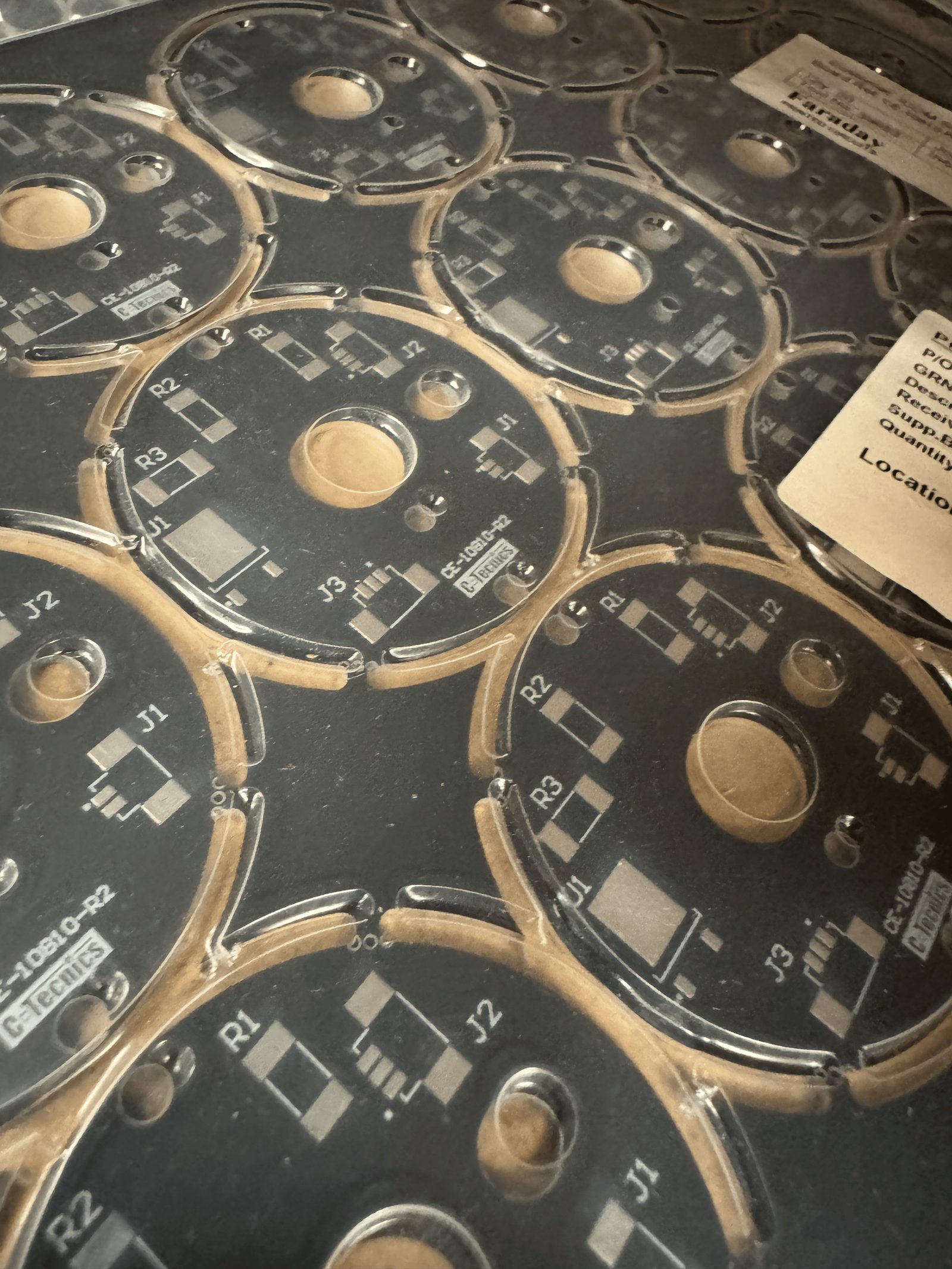
Icom-Scottech provides a controlled bare printed circuit board (PCB) sourcing service to support prototype, pre-production and serial manufacture. We procure bare boards against approved customer data sets, ensuring that fabrication outputs remain aligned to the released design intent, applicable standards and downstream assembly requirements. This approach provides a single point of accountability for board supply, whilst supporting repeatable quality and schedule assurance across the product lifecycle.
Prior to order placement, we undertake a technical review of the fabrication specification to confirm critical attributes including layer count and stack-up, dielectric materials, copper weights, finished board thickness, controlled-impedance structures, via types, hole tolerances, surface finish (e.g. ENIG, immersion silver, HASL), solder mask and legend requirements, and any mandated approvals or compliance obligations. Where appropriate, we support clarification of fabrication notes, drawing packs and data outputs (e.g. Gerber/ODB++), reducing ambiguity and improving first-pass manufacturability.
Procurement is managed through controlled supply-chain processes, including supplier selection appropriate to the required technology, quotation and capability assessment, and active management of lead-time and capacity. We maintain oversight of revision status and controlled change management to ensure that fabrication updates are applied only when formally released. Where required, we can request and retain supporting quality documentation such as certificates of conformity, electrical test results, impedance reports, and inspection records, providing objective evidence that boards meet the specified acceptance criteria.
On receipt, bare PCBs may be subject to incoming inspection and acceptance in accordance with the agreed specification and, where applicable, IPC acceptance criteria (e.g. dimensional verification, solder mask registration, surface finish condition, hole quality and marking). Documentation and test data are reviewed and retained where specified to support traceability and audit requirements. Following acceptance, boards are identified and released into controlled production stock, ensuring downstream assembly is supplied with verified materials and an auditable record of supply.
Ready to start your build?
Upload your BOM and manufacturing data package, or contact us by phone or email to discuss your requirements.